
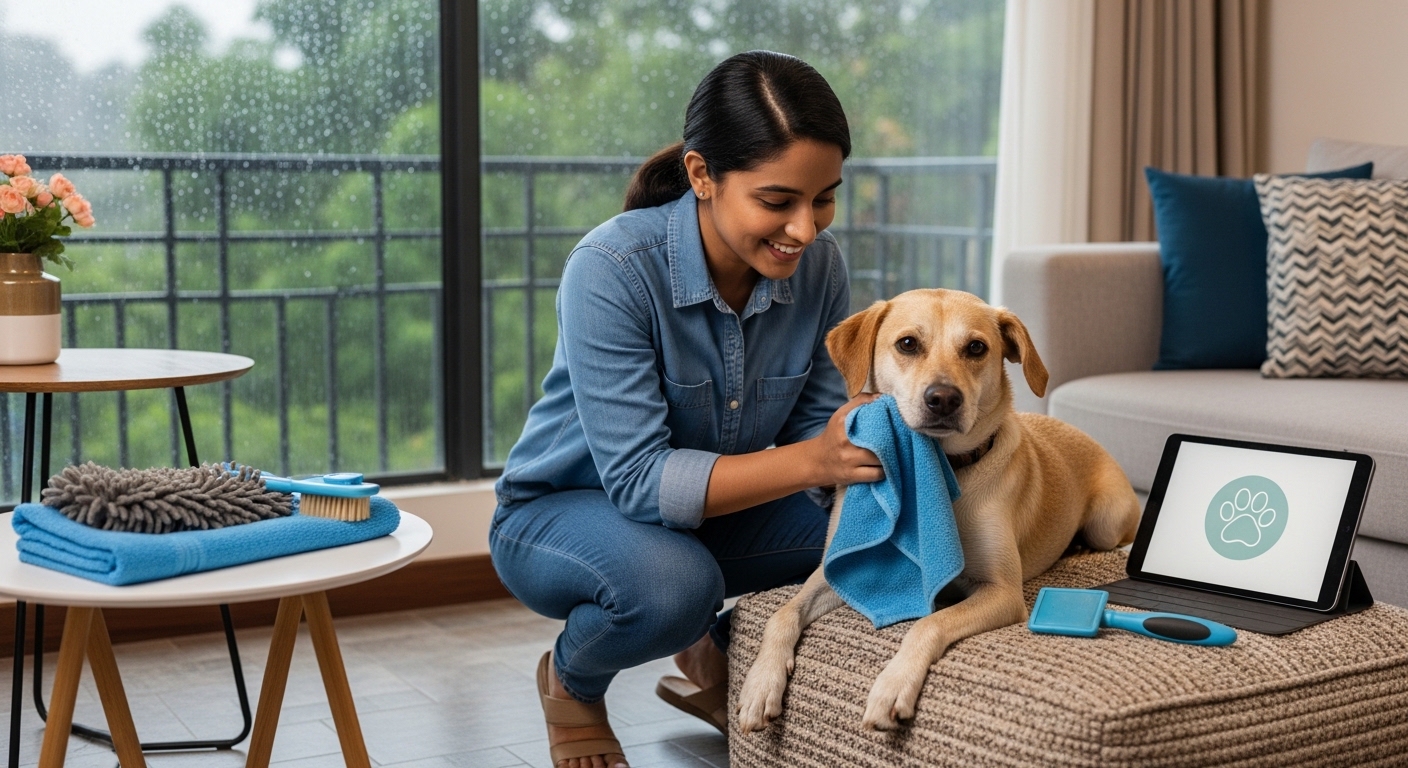
Introduction: Why Monsoon Pet Care Matters
Monsoon pet care is very important for dog owners. During the rainy season, dogs face extra health risks. For example, wet weather can lead to fungal infections and wet paw disease. These problems are common in areas with heavy rain. Because of this, knowing how to protect your dog is key. With the right steps, you can keep your pet safe and happy all season long.
Common Fungal Infections in Dogs During Monsoon
Fungal infections often increase during the monsoon. Moisture and mud create a perfect place for fungi to grow. Dogs can get these infections on their skin, ears, and paws. Some common fungal infections include:
Moreover, dogs who play outside are at higher risk. Therefore, it is important to check your dog’s skin and paws often.
Understanding Wet Paw Disease: Symptoms and Causes
Wet paw disease is a common problem in the rainy season. It happens when your dog’s paws stay damp for too long. As a result, bacteria and fungi can grow between the toes. This leads to pain and infection. Watch for these symptoms:
Because wet ground is everywhere during monsoon, dogs are more likely to get this disease. Even short walks can make paws wet and dirty.
Diagnosis and When to See a Vet
If you notice signs of infection, act quickly. Early diagnosis helps prevent serious problems. For example, if your dog’s paws are red, swollen, or smelly, call your vet. Sometimes, a vet may take a skin sample or swab to check for fungi or bacteria. In some cases, lab tests help find the exact cause. Therefore, do not wait if your dog seems uncomfortable or the symptoms get worse.
Effective Treatment Options
Treatment depends on the type and severity of the infection. Most mild cases can be managed at home, but some need veterinary care. Common treatments include:
However, never use human medicines on your dog. Always follow your vet’s advice for the best results.
Prevention Tips for Dog Owners
Preventing fungal infections and wet paw disease is easier than treating them. Here are some simple monsoon dog care tips:
In regions with heavy monsoon, extra care is needed. For example, avoid walking your dog during heavy rain or in flooded areas.
Home Care and Hygiene Practices
Good hygiene helps keep your dog healthy during the rainy season. For best results, follow these steps:
Additionally, regular grooming reduces the risk of skin problems. Because wet fur can trap germs, keeping your dog clean is very important.
Frequently Asked Questions
For more information, you can visit trusted sources like the Centers for Disease Control and Prevention (CDC) and peer-reviewed veterinary journals.
Consult your veterinarian at Shalihotra’s Vet Clinic for personalized advice on monsoon pet care.